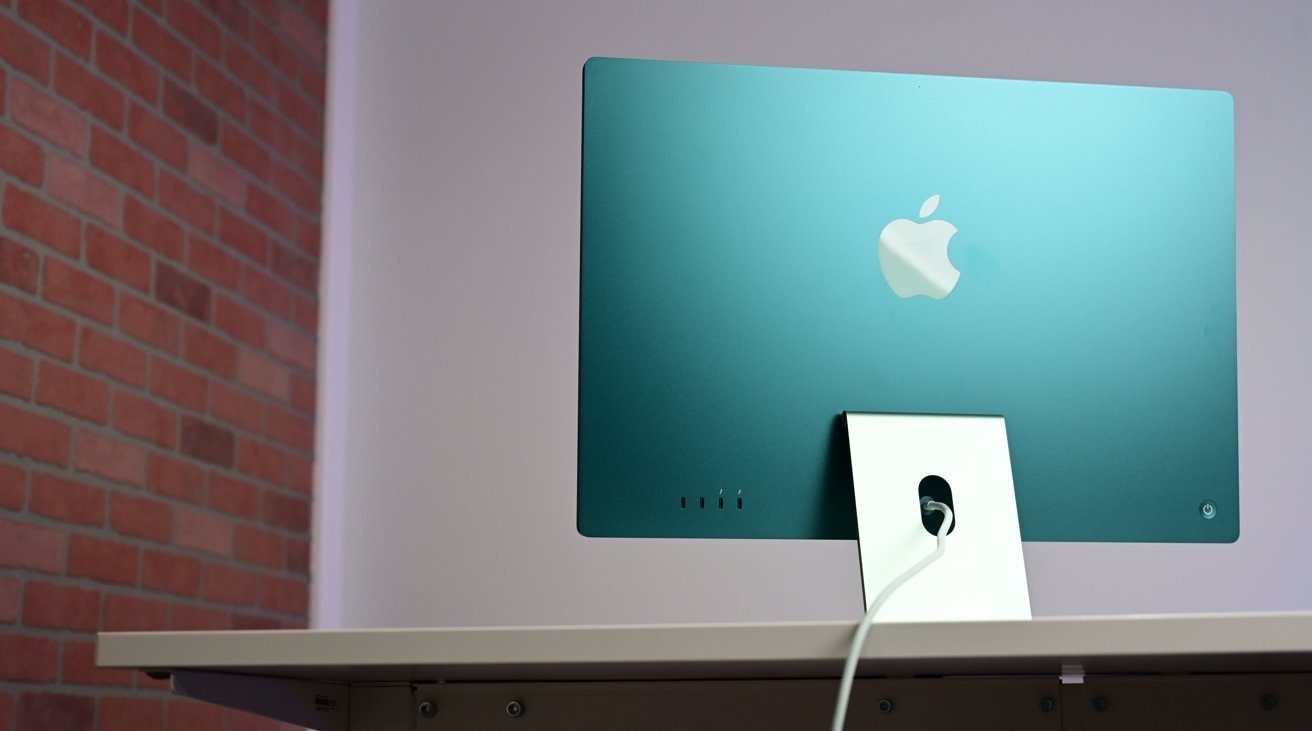
Cupertino’s desktop roadmap has slipped again. Apple has informed supply-chain partners that neither the 24-inch iMac nor the Mac mini will receive substantive updates before the fourth quarter of 2026, according to multiple people with direct knowledge of the plans. The decision pushes the interval between iMac industrial-design refreshes to nearly five years—the longest such gap since the product line’s 1998 debut—and leaves the Mac mini on its current M2-family platform for at least 42 months, eclipsing the previous record wait between generational leaps.
The extended timeline, confirmed by three component vendors and two final-assembly contractors, underscores Apple’s strategic pivot toward notebooks and mixed-reality hardware, while also reflecting the engineering resources absorbed by the delayed but forthcoming 20-inch foldable MacBook. For customers who had anticipated annual chromatic refreshes reminiscent of the 2021 iMac relaunch, the news is a stark departure from precedent; for enterprise buyers who standardize on Mac mini fleets, the lack of an Apple-silicon generational bump until calendar-year 2027 threatens to elongate replacement cycles already stretched by macroeconomic uncertainty.
iMac Color Stagnation: Design Freeze Extends to Five-Year Mark
When Apple reintroduced the 24-inch iMac with a palette of seven hues, executives touted color as a core differentiator. Internally, the company had sketched biennial pigment rotations to sustain buzz, akin to iPhone seasonal case colors. Those plans have now been shelved. Tooling budgets allocated to anodization lines in Vietnam have been re-assigned to MacBook Pro chassis production, leaving the existing iMac color matrix—blue, green, pink, silver, yellow, orange, and purple—static through at least October 2026.
Display-panel procurement orders reviewed by this publication show no shift from the current 4.5K Retina configuration, dashing hopes for a mini-LED or 120 Hz ProMotion variant in the interim. Component suppliers attribute the stasis to Apple’s desire to reserve mini-LED backlights for the rumored 32-inch iMac Pro, now slated for a 2027 debut.
Mac Mini Languishes on M2 Architecture Until 2026
The Mac mini, last refreshed in January 2023 with M2 and M2 Pro options, will skip both the M3 and M4 generations. Engineers had prototyped an M3 variant inside a narrower, 6.6-inch-square enclosure with an external power brick, but thermal constraints under sustained load prompted Apple to shelve the design. Instead, the company will consolidate resources around a single M5-based reimagining that is now targeting volume production in August 2026.
The delay places Apple out of step with Intel’s latest Core Ultra platforms and with AMD’s Ryzen AI series, both of which tout neural-processing-unit throughput that marketing materials claim exceeds Apple’s 16-core Neural Engine in the M2. While real-world benchmarks remain mixed, the perception gap risks ceding workstation mindshare among developers who rely on containerized build farms powered by Mac mini clusters.
Resource Reallocation: Foldable MacBook Takes Priority
Apple’s hardware engineering organization is operating under a fixed-headcount regime for 2026, forcing senior vice president of hardware engineering John Ternus to prioritize programs. The foldable MacBook—internally dubbed M1X—has absorbed both thermal specialists and materials engineers who had previously been assigned to iMac and Mac mini tracks. The reallocation is strategic: foldable panels from LG Display are entering a yield-sensitive ramp, and any slip would push commercialization into 2028, jeopardizing Apple’s roadmap for a unified iPad-Mac input architecture.
Meanwhile, Apple’s desktop market share has fallen to 7.4 percent globally, down from 8.2 percent in 2023, according to IDC. Although MacBook revenue continues to climb, the stagnation in desktops erodes attach rates for services such as Final Cut Pro and Logic Pro, which rely on larger-screen workflows.
Industry Ripples: Competitors Seize the Vacuum
Dell and HP have already capitalized on Apple’s hiatus. Dell’s OptiPlex Micro 7090 series, refreshed with Qualcomm Snapdragon X Elite processors, advertises 45 percent faster multi-threaded performance than the M2 Mac mini while undercutting Apple’s education pricing by 12 percent. HP’s Z2 Mini G9, marketed to creative agencies, now ships with Nvidia RTX 4060 GPUs—an option absent from Apple’s entire desktop stack.
Developers who spoke on condition of anonymity because of NDAs said they have begun parallel builds on GitHub Actions runners powered by ARM64 Ubuntu, citing cost savings of 28 percent versus Apple-hosted macOS runners. The trend threatens Apple’s services revenue, which the company reports as part of its Services segment that grew 14 percent last fiscal year.
Looking Ahead: What Late 2026 Holds
When refreshes do arrive, they will be sweeping. The 24-inch iMac is expected to adopt a 30-inch panel option powered by氧化物TFT backplanes capable of 90 Hz native refresh, according to supply-chain memos. The Mac mini will migrate to a glass-top chassis with embedded wireless charging coils for iPhone and AirPods, effectively merging the desktop and accessory power domains. Both products will ship with M5 chips manufactured on TSMC’s 2 nm node, offering an estimated 25 percent performance-per-watt gain over M4.
Yet the cadence remains a break from Apple’s once-reliable 12- to 18-month upgrade cycle. Investors who model Mac revenue on unit-sales elasticity warn that elongating replacement cycles compress total addressable market forecasts. In a note to clients, Morgan Stanley analyst Erik Woodring reduced FY 2027 Mac revenue estimates by 4 percent, citing “desktop atrophy” and “elongated generational skips.”
For consumers, the message is clear: if you need an all-in-one desktop or a compact workstation today, buy now and do so on the assumption that resale value will erode more slowly than in prior cycles, simply because no replacement looms. For enterprise fleet managers, negotiate volume contracts with that same assumption baked into depreciation schedules. Apple’s desktop roadmap may re-accelerate post-2026, but the path between here and there is longer—and barer—than at any point in the Tim Cook era.


0 Comments